
Sea turtle bycatch in tuna fisheries occurs in several ways, through hooking on longlines, entanglement in longlines, gillnets and purse seine FAD netting (both above and below the waterline), and they are sometimes encircled in purse seine nets.
Successful bycatch mitigation techniques for longlines include replacing squid with fish bait, using circle hooks with a moderate (<100) offset, deep setting, reducing daylight soak duration, limiting retrieval during daylight hours, and dynamic spatial and temporal measures (e.g. TurtleWatch).
In purse seine fisheries, biodegradable and non-entangling FADs can reduce both bycatch and marine pollution. Learn about these new FAD designs, such as the Jelly-FAD, on the ISSF website.
For gillnets, net illumination is effective. Using taxa-specific safe handling and release techniques successfully improves post-release survival, for all gear types.
SeaLlifeBase is a source of biological and distribution data for sea turtle species. Well illustrated species profiles can be found in the 'Marine Turtles of the Maldives' (green, hawksbill, olive ridley, loggerhead and leatherback turtles). NOAA's 'Find a Species - Sea Turtles' has information on protection status, biology and population status, distribution, threats, conservation measures and research. Locate handy Species ID guides here.
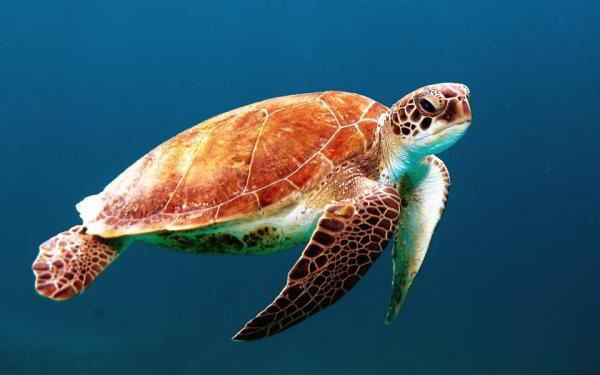
Sea Turtles
| 3-Alpha Code | Name | Scientific Name |
|---|---|---|
| DKK | LEATHERBACK TURTLE | Dermochelys coriacea (new FAO) |
| FBT | FLATBACK TURTLE | Natator depressus |
| KEZ | EASTERN PACIFIC GREEN TURTLE | Chelonia agassizii |
| LKV | OLIVE RIDLEY TURTLE | Lepidochelys olivacea |
| TTH | HAWKSBILL TURTLE | Eretmochelys imbricata |
| TTL | LOGGERHEAD TURTLE | Caretta caretta |
| TTX | MARINE TURTLES NEI | Testudinata |
| TUG | GREEN TURTLE | Chelonia mydas |